

In a remarkable academic achievement, Huang Zixuan, an undergraduate student from the Joint Institute of Jinan University & Birmingham University, has made significant progress in the field of artificial intelligence. The student's research paper, entitled 'GFBLS: Graph-regularized fuzzy broad learning system for detection of interictal epileptic discharges,' has been published in the prestigious journal 'Engineering Applications of Artificial Intelligence,' renowned for its high impact factor of 8.0.
The paper's focus on developing advanced AI systems for medical applications underscores the practical and transformative impact of research conducted at J-BJI.
Abstract of the Paper
Epilepsy as the most common neurological disorder globally has drawn more and more attention. However, it is time-consuming and labor-intensive for manual detection of interictal epileptic discharges (IEDs). Thus, there is an urgent need to develop an efficient and automated detection approach as a more accurate diagnostic alternative for epilepsy detection. Recently, fuzzy broad learning system (FBLS) has been recognized as an alternative to deep learning and utilized in various fields. Nevertheless, FBLS ignores the locally invariant property of data. To effectively address this issue and further improve the performance of FBLS, a novel graph-regularized fuzzy broad learning system (GFBLS) is first proposed based on graph regularization. Moreover, an automated GFBLS-based approach is proposed for IEDs detection from EEG recordings. In the proposed method, graph convolutional neural networks (GCN) is firstly utilized to extract features from line graphs with undirected connections, which are constructed by EEG recordings, then extracted features by GCN are fed into GFBLS for IEDs detection. The experimental results demonstrated that GFBLS can achieve accuracy of 92.20%, specificity of 90.90% and precision of 91.13% with the training time of only 31.6 s, which is superior or comparable performance compared with other state-of-the-art approaches.
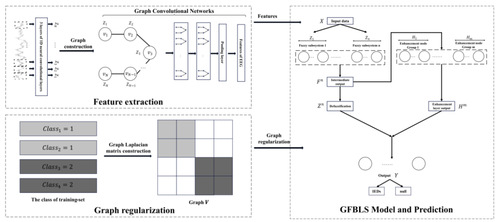
The improved method proposed in this paper has improved the discriminative and generalization ability of the model. Compared with past methods, the proposed method can achieve superior detection performance. This achievement indicates that the Graph Regularized Fuzzy Broad Learning System proposed in this paper has broad application prospects in interdisciplinary fields such as artificial intelligence and medicine.
Explore the original article:
https://www.sciencedirect.com/science/article/pii/S0952197623009478
The Author in Spotlight
The first author of the groundbreaking paper is Huang Zixuan, an ambitious undergraduate student from the 2020 cohort at the Joint Institute of Jinan University & Birmingham University. The guiding tutor behind this research is Associate Professor Duan Junwei from Jinan University's College of Information Science and Technology.
This research stands on the shoulders of robust funding and support from prestigious sources, including the Guangdong Basic and Applied Basic Research Foundation's Natural Science Foundation project, the crucial National Key R&D Program focusing on 'Proactive Health and Aging Science and Technology Response,' and the Guangdong Provincial Key Laboratory of Traditional Chinese Medicine Informatics. These significant contributions have enabled the exploration and development of innovative solutions in the realm of artificial intelligence.


