
University leaders and education officials met at Jinan University on 15 October to discuss how Sino-foreign cooperative education can strengthen teaching, research and institutional development in Guangdong during the 15th Five-Year Plan period.
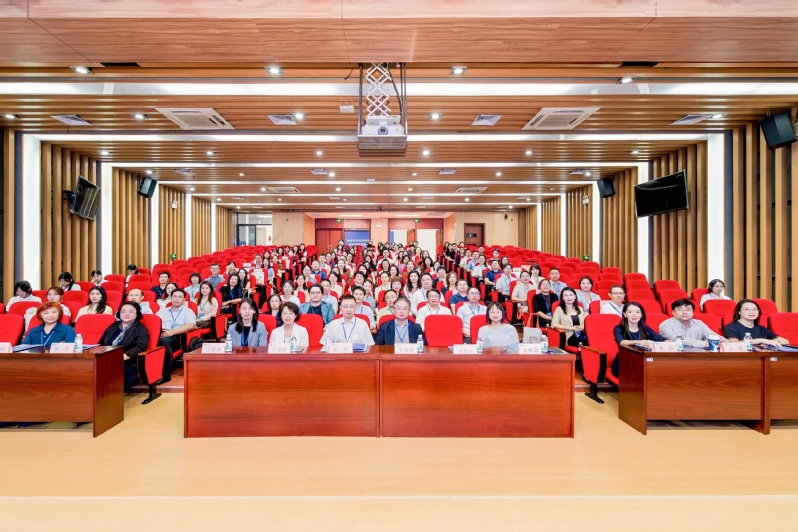
Held at Deng Youcai Auditorium on the University’s Panyu Campus, the 2026 Meeting and Inaugural Academic Symposium of the Guangdong Alliance of Sino-Foreign Cooperative Education Institutions brought together representatives from universities within and beyond the province. Discussions covered support for newly approved institutions, the use of digital and intelligent technologies in education, and ways to share successful practices across the sector.
Li Jinjun, Second-level Inspector at the Department of Education of Guangdong Province, and Zhang Hong, Vice-President of Jinan University, attended the meeting. Zhou Liuyu, Deputy Director of the Department’s Division of Exchange and Cooperation, chaired the proceedings.
Priorities for Guangdong and the Alliance
In his address and thematic presentation, Li outlined Guangdong’s role in cooperative education. He noted that six of China’s 11 universities with independent legal personality established with overseas partners or partners in Hong Kong and Macao are based in Guangdong. The province also has 22 approved cooperative education institutions without independent legal personality and 54 approved programmes at undergraduate level and above.
Li called on institutions to respond to global change and advances in intelligent technologies while maintaining a clear strategic direction. He said the Alliance should provide political guidance, support high-quality development, enable resource sharing and contribute academic research to Guangdong’s educational engagement with the world.
He also praised Jinan University-University of Birmingham Joint Institute (J-BJI), the Alliance’s lead institution, for setting an example for Sino-foreign cooperative education in Guangdong through a decade of work to improve educational quality.
Zhang thanked the Department of Education and partner institutions for their longstanding support. He said the Alliance had strengthened its operating arrangements and deepened exchanges among members since its establishment a year earlier.
With Jinan University marking its 120th anniversary, Zhang highlighted the University’s efforts to improve existing cooperative education provision and develop new initiatives. Over its first decade, J-BJI has built an approach linking high-quality student intake, rigorous education and clear pathways after graduation. Its Five-Dimensional Integrated Education Model puts the principle of fostering virtue through education into practice.
Zhang noted that J-BJI had passed domestic and international quality evaluations and won national and provincial awards for teaching achievements. Approval of a new master’s programme this year has expanded its provision to postgraduate level. The Ministry of Education has also approved Jinan University’s second cooperative education institution without independent legal personality.
As the Alliance’s first rotating executive institution, J-BJI will focus on helping established institutions support newer members, promoting joint academic research and developing recommendations on institutional frameworks, Zhang said.
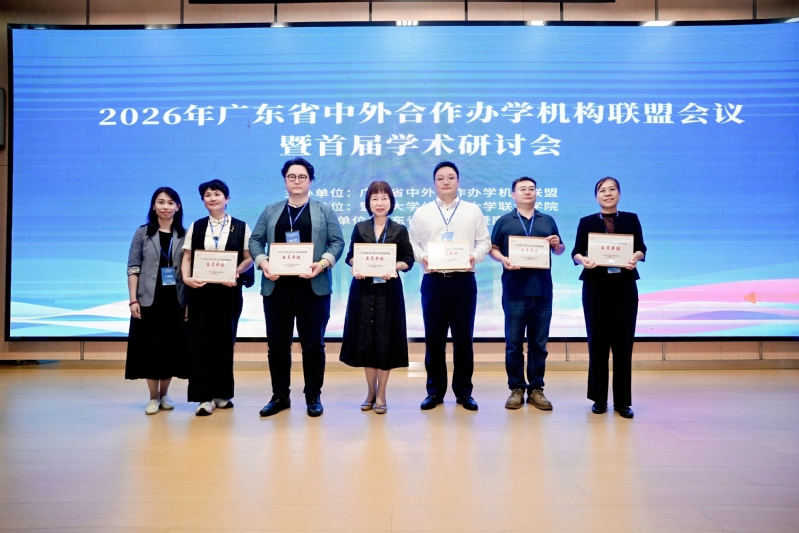
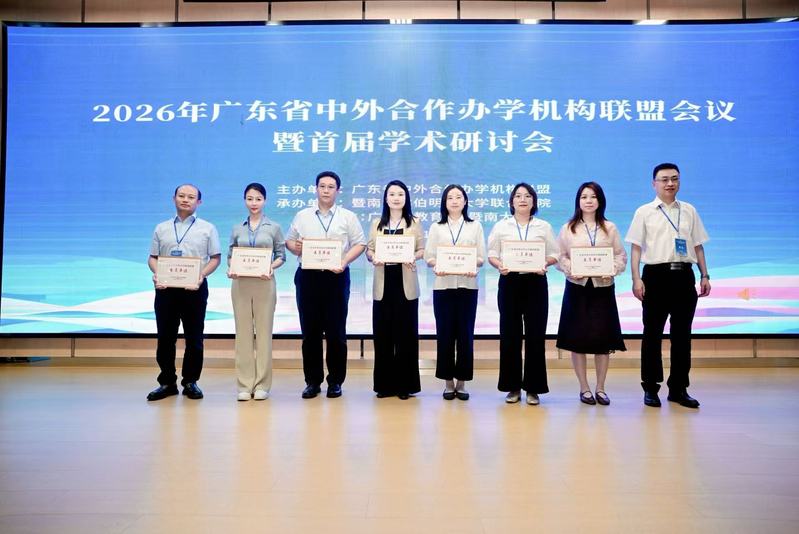
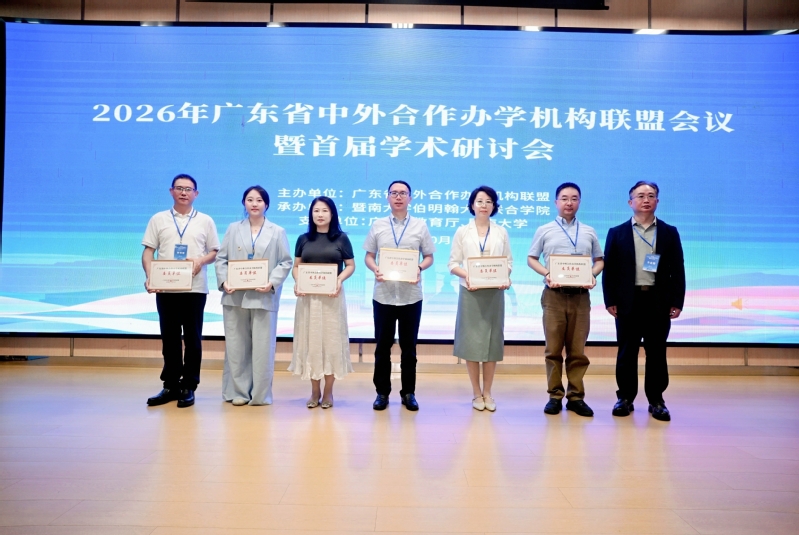
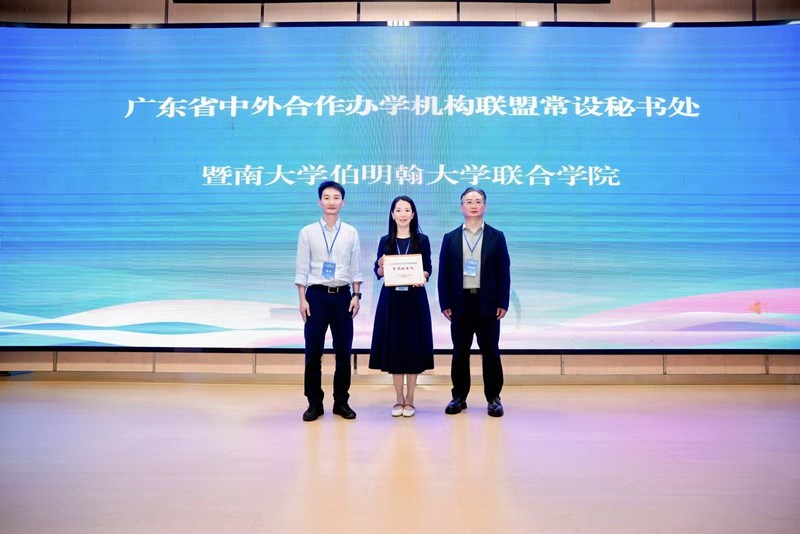
The meeting also saw certificates presented to the Alliance’s committee member institutions and its Permanent Secretariat. Three research topics were announced: governance mechanisms and compliant operations; applications of digital and intelligent technologies in teaching and student development; and faculty development and industry-education collaboration in Sino-foreign cooperative education.
Sharing approaches to teaching and institutional development
Two keynote addresses explored how institutions can improve their educational models and extend the benefits of successful practice.
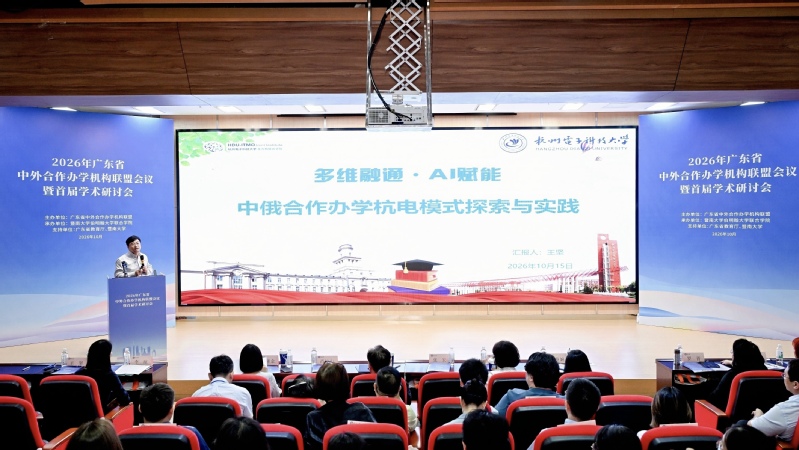
Wang Jian, Dean of Hangzhou Dianzi University ITMO Joint Institute, presented Hangzhou Dianzi University’s (HDU) approach to Sino-Russian cooperative education. Drawing on its partnership with ITMO University in Russia, he discussed how a Chinese institution can retain a leading role while introducing, adapting and integrating resources from its overseas partner. He also described its “4+0” undergraduate and “2.5+0” master’s programmes, which allow students to earn degrees from the overseas partner without studying abroad.
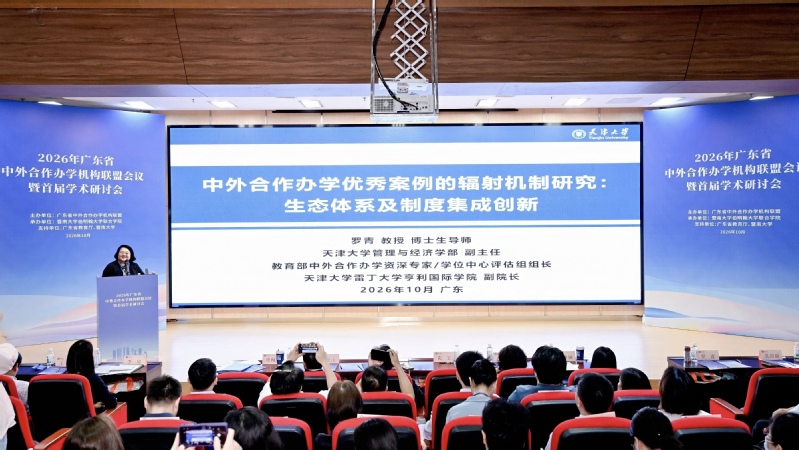
Luo Qing, Vice Dean of the College of Management and Economics at Tianjin University, examined how exemplary cooperative education practices can benefit other institutions. The address explored ecosystems for internationalisation at home, innovation through integrated institutional arrangements, and the mechanisms through which successful approaches can spread across the sector.
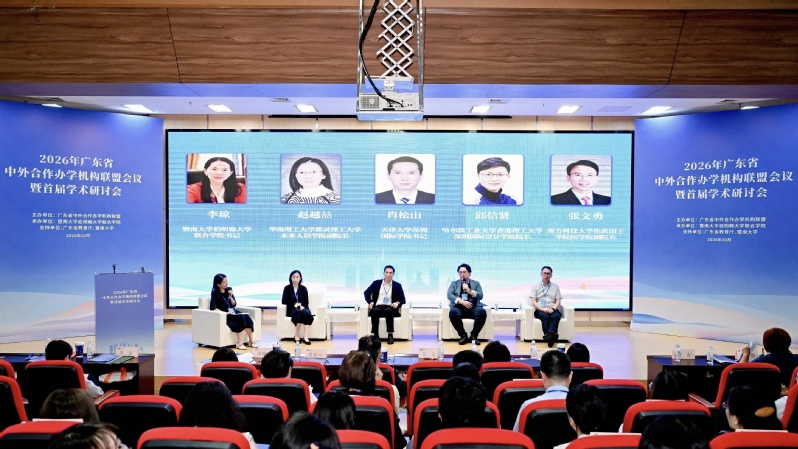
The first of two roundtable discussions focused on newly approved institutions in Guangdong. Moderated by Li Qiong, Chair of J-BJI, it examined how partners can integrate their educational provision, secure resources and support from both universities, and address the practical challenges of starting operations.
Panellists were Xiao Songshan, Party Secretary of the Shenzhen International Institute of Tianjin University; Hsin-Hsien Chiu, Dean of the Harbin Institute of Technology–The Hong Kong Polytechnic University Shenzhen International School of Design; Zhang Wenyong, Deputy Dean of the Southern University of Science and Technology–King’s College London Joint School of Medicine; and Zhao Yuezhe, Deputy Dean of the SCUT-PoliTo School of Future Human Habitats.
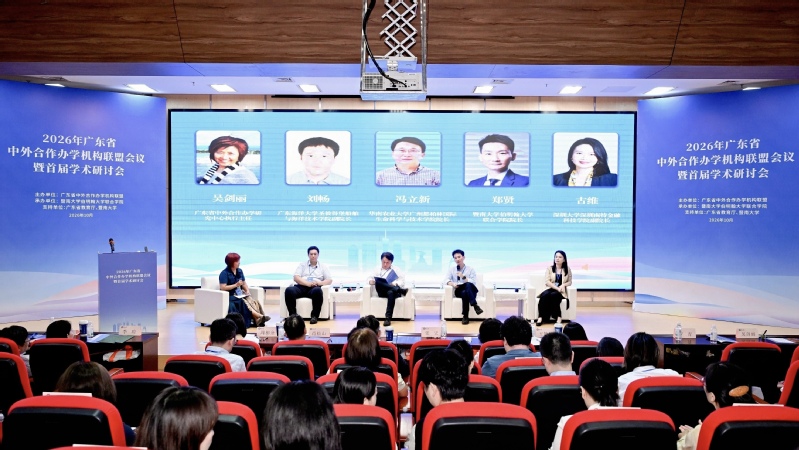
The second roundtable examined experience in running cooperative education institutions, including the development of disciplines and degree programmes, collaborative research and innovation, and ways to extend an institution’s impact. It was moderated by Wu Jianli, Executive Director of the Guangdong Research Centre for Sino-Foreign Cooperative Education (Mainland-Hong Kong/Macao).
The invited panellists were Zheng Xian, Dean of J-BJI; Feng Lixin, Dean of Guangzhou Dublin International College of Life Sciences and Technology at South China Agricultural University; Gu Wei, Deputy Dean of Shenzhen Audencia Financial Technology Institute, Shenzhen University; and Liu Chang, Deputy Dean of Saint-Petersburg Institute for Shipbuilding & Marine Technology of Guangdong Ocean University.
In her closing remarks, Wang Jingxian, Director of the Division of Exchange and Cooperation at the Department of Education of Guangdong Province, thanked the host institution and participants. She encouraged institutions to stay focused on their educational mission, draw on the Greater Bay Area’s geographical advantages and use collaborative platforms to share Guangdong’s experience of opening up education to the world.


